iMessage Tapbacks as Social Signals in Group Coordination
Thumbs-up doesn't always mean yes, and that silence could sink your plans.
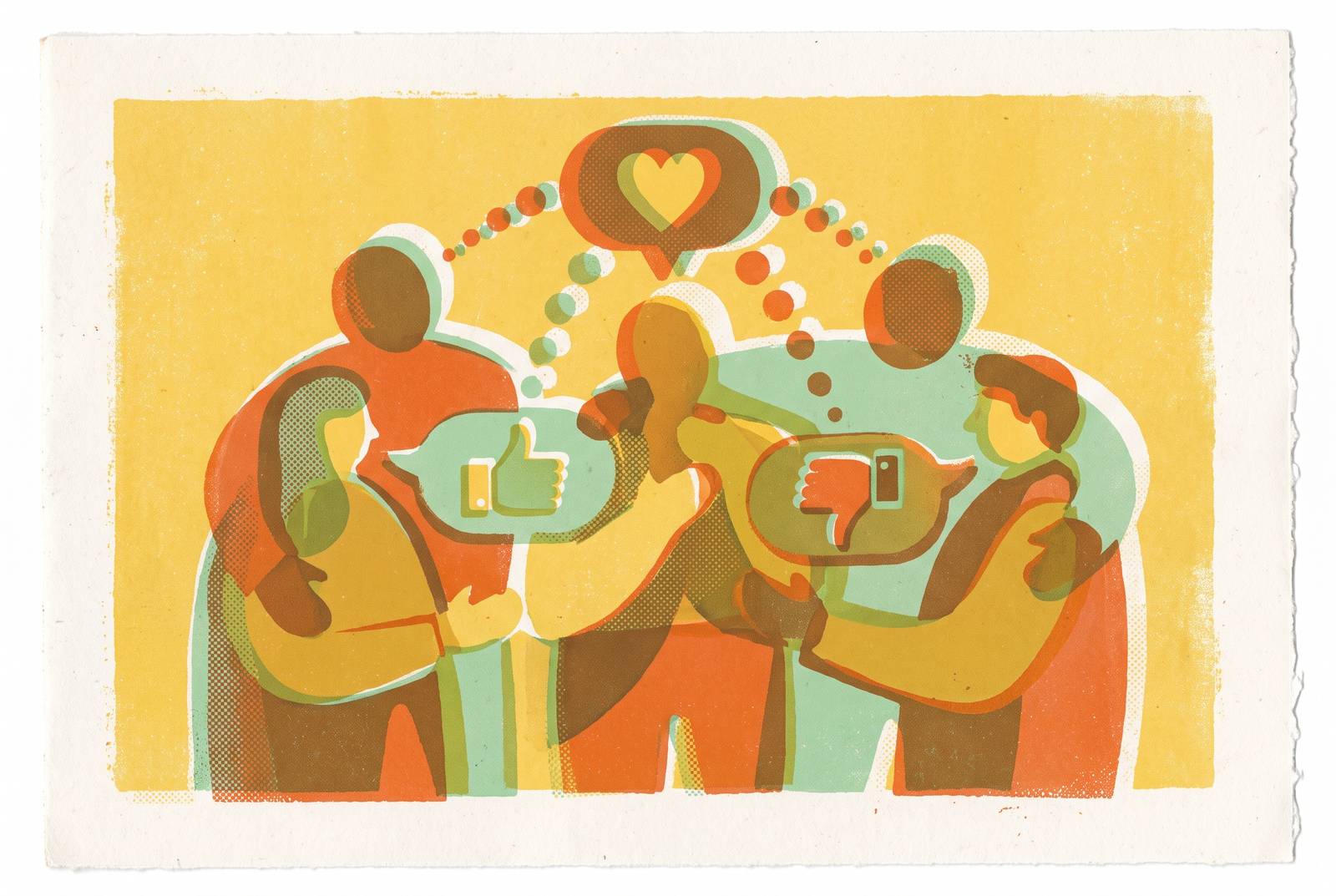
When someone sends "Saturday at noon?" into a group chat and six thumbs-up reactions appear beneath it, the exchange feels complete. Nobody said the word "yes," but the plan seems to have landed. The question this article examines is whether that feeling is warranted, and the answer is more uncomfortable than most group threads would suggest. Tapbacks are not lazy shorthand. They are structurally specific conversational acts, and reading them correctly is the difference between a plan that reaches the calendar and one that quietly evaporates.
What Tapbacks actually are, structurally, and why that matters for planning
The simplest way to understand a Tapback is as the text-message equivalent of a nod. In spoken conversation, a participant can acknowledge a proposal without taking a full conversational turn: a nod, an "mm-hmm," a brief "sure." These minimal responses do real work. They close out an exchange, signal receipt, and let the conversation move forward without anyone having to launch into a full sentence. The same economy operates in text, and that is precisely what makes Tapbacks useful.
Leanna Rudin's conversation analysis study at Teachers College, Columbia University identifies Tapbacks as what conversation analysts call sequence-closing seconds. A Tapback is not a decoration appended to a message. It is the second half of a conversational sequence.
This structural function is more precise than most users realize. Rudin's analysis maps distinct conversational functions onto the original six reactions. A like, the thumbs-up, acknowledges a directive: when someone proposes a plan and a like appears, that reaction is doing the work of agreement. A love signals appreciation for an offer, registering warmth toward a commissive rather than binding assent. An emphasize, the double exclamation mark, affiliates with a telling, matching the energy of a complaint or an excited announcement rather than responding to a request. A heart Tapback on a plan proposal is a different act than typing a heart emoji in a reply. The Tapback operates as a structured second pair-part. The emoji is just an expressive addition to a sentence.
Why this matters for planning is straightforward. A coordinator trying to figure out who has actually committed to dinner on Friday is not reading decorations. What doesn't exist is any guarantee that the participants share an understanding of it.
Why group chats are especially hard to coordinate and what role Tapbacks play in that friction
Group chats introduce a coordination problem that Tapbacks partially solve and partially disguise. The fundamental difficulty is structural: a group thread is asynchronous, multi-topic, and noisy. Messages about a plan get buried under unrelated conversation, and tracking who has responded to what becomes genuinely difficult. Rudin's study notes that Tapbacks address this challenge by enabling acknowledgment without prolonging discussion. A thumbs-up compresses the noise of a group thread into a compact, scannable marker that sits directly on the message it responds to. That compression is the feature.
The cost of compression is information loss. It could mean "I saw this," or "I'm in," or "let's talk later," and nothing in the reaction itself distinguishes among those meanings. This ambiguity matters more in groups than in one-on-one exchanges because the stakes are higher. A misread thumbs-up in a conversation between two people usually gets clarified quickly. In a group of eight, a misread thumbs-up can sit there looking like consensus while the actual commitment level remains at zero.
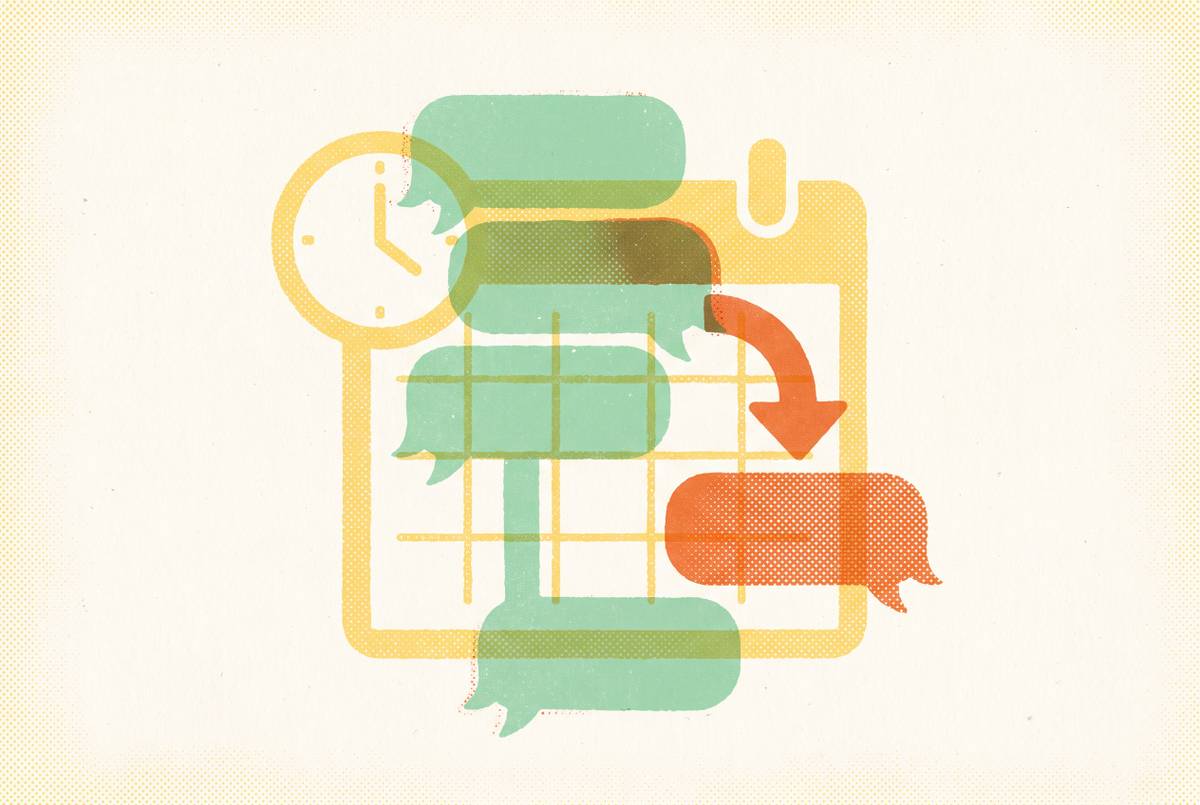
Responsiveness itself drops in group settings. Research on iMessage data by Gerber and Cooperman finds that people respond measurably less in group chats than in one-on-one conversations, a pattern consistent with what social psychologists call diffusion of responsibility. When a question reaches eight people at once, each person assumes someone else will answer first. Tapbacks can accelerate this dynamic rather than correct it. If six people heart a plan proposal, each one may assume the others have confirmed, and no one converts that apparent intent into anything resembling a calendar entry. The reaction makes the thread look alive. It does nothing to make the plan real. Tools designed to work inside the group chat itself, like Text Pencil, move past this reaction-based coordination by helping members propose times and confirm attendance explicitly, without anyone having to interpret a thumbs-up as either "noted" or "count me in."
How to read each Tapback as a commitment signal, and where the readings break down
In a planning thread, each Tapback sits somewhere on a spectrum from soft acknowledgment to active commitment. Misreading where a given reaction falls is the most common way a plan quietly dies, so a working map of the signals is worth establishing. The thumbs-up is structurally the strongest commitment signal among the original six. This reading follows directly from Rudin's analysis: a like acknowledges a directive, and a plan proposal is a directive, so the like is doing agreement work. The heart, by contrast, is structurally weaker. A heart on a plan proposal signals appreciation for the offer, warmth toward the idea, not a pledge to attend. It says "I like this" more than "I will show up." The exclamation mark reaction affiliates with the proposal's energy. Two exclamation points on "dinner Friday?" registers enthusiasm, not attendance; it is closer to "that sounds great" than to "I'm coming."
The question mark is the clearest signal that coordination is not closed. It flags ambiguity and invites clarification, keeping the sequence open rather than closing it. The thumbs-down is rare in social planning threads, but structurally unambiguous: it is the only one of the six reactions that closes the sequence in the negative. And then there is the absence of any reaction at all, which is the hardest reading problem in the set. Silence is not a signal, but participants routinely treat it as one, reading it as passive consent on one side or a silent veto on the other, with no structural basis for either interpretation.
The interpretation gap is real and documented. Popular discussion of Tapbacks consistently surfaces the complaint that a thumbs-up can read as enthusiastic agreement to one person and a dismissive "noted" to another. Group coordination tools that operate natively in iMessage, such as Text Pencil, sidestep this ambiguity by translating soft signals like Tapbacks and text responses into explicit calendar commitments, so the group can see when intent has actually hardened into a plan.
How iOS 18's emoji Tapback expansion changes what a reaction can mean in a planning thread
Apple's expansion of Tapbacks in iOS 18 from six fixed reactions to any emoji a user wants increased the expressive range of the system. It did not increase the precision. Rudin's study notes the expansion and the potential it creates for more nuanced expression, but that nuance comes with a cost: the interpretation gap widens in exactly the moments when precision matters most.
A face emoji like a grimace or a wince on a plan proposal is not a thumbs-down, but it is not a thumbs-up either. The fixed set of six had a shared, if often misread, vocabulary. The expanded set has no shared vocabulary at all.
The device-split problem makes it worse. Both the sender and the recipient need iOS 18 or later to send and see emoji Tapbacks. On older devices, only the six standard reactions display correctly, and if any group member has not updated, they may see custom emoji reactions rendered as text strings rather than reactions. The social signal degrades mid-thread, and the degradation is silent: the coordinator may not know that half the group is looking at garbled text while the other half is looking at expressive reactions. The fragmentation that was already present in the interpretation of six fixed signals becomes deeper with an unlimited set, and it arrives at the worst possible moment, when the group is trying to converge on a specific time and place.
The blue-bubble boundary and what happens to Tapback signals in mixed-device groups
In any group that includes Android users, Tapbacks as commitment signals encounter a harder limit. The problem is not interpretation but infrastructure. iMessage Tapbacks are a feature of Apple's proprietary messaging protocol, end-to-end encrypted and, within iMessage, exclusive to Apple devices. Cross-platform Tapback support has arrived for RCS conversations with Android users as of iOS 26.5 and iOS 27, but the path there was long, and the signal space is still fractured.
When an iMessage group includes a non-Apple participant, the conversation shifts to RCS, or falls back to MMS if RCS is unavailable. Sinch's 2026 comparison of RCS and iMessage confirms that the encryption gap between the two protocols is narrowing for personal chats, and full cross-platform Tapback support is arriving with RCS Universal Profile 3.0. But RCS supports reactions natively in its own way, and protocol variances mean that iPhone Tapbacks and Android reactions do not map cleanly onto each other across the boundary.
The practical consequence is a silent fracture. A coordinator in an iPhone-to-iPhone chat sees a clean thread of reactions. An Android participant in the same group may see a stream of text notifications, or a set of reactions rendered imperfectly, and the shared signal space has broken without anyone announcing it. The coordinator who reads a thread of thumbs-ups as group-wide confirmation may have no signal at all from the Android members of the group, and no reason to suspect anything is missing.
Why a Tapback creates the feeling of progress without producing a confirmed plan
A thread full of reactions can feel like a converging plan while the actual commitment level is zero. This illusion of alignment is the most common reason a plan dies quietly instead of visibly. Neither party is bound, no time is held, and no calendar entry exists. The social warmth generated by a thread of reactions, six hearts and two thumbs-ups, signals engagement and affiliation, and that warmth reduces the urgency anyone feels to follow up. Everyone assumes the plan is forming.
This is structurally different from a plan dying because no one responded. When a proposal gets no reactions, the failure is visible: the thread goes quiet, and everyone can see that nothing happened. When a proposal gets six affirming reactions, the thread looks active. But the plan has no anchor, and the efficiency that makes Tapbacks useful in active conversation is exactly what makes them dangerous in coordination. Rudin's study acknowledges that Tapbacks enable acknowledgment without prolonging discussion. They close the sequence, and in doing so they can close the conversation while leaving the plan entirely open.
The failure mode is predictable. The moment when someone might have suggested a specific time or created a calendar event slips by, and the plan evaporates without a visible moment of collapse. Nothing failed. It just never became real.
How to close the loop and get a group hangout onto calendars without leaving iMessage
The gap between a thumbs-up and a confirmed plan closes only when someone acts on specificity and moves the plan out of the chat and onto a calendar. The research and practitioner consensus points to two moves. A plan on participants' calendars has a different social and logistical status. It creates a mutual obligation that a Tapback does not.
The follow-up problem is structural. But gentle, well-timed follow-ups are meaningfully different from pestering. A nudge sent at the right moment, in the right register, within the same conversation, preserves the warmth of the original thread rather than restarting coordination from scratch.
The tools that reduce friction here are the ones that do not require leaving the conversation. Text Pencil is an iMessage-native scheduling assistant: it works inside a group thread, using participants' calendars to coordinate availability, propose times, send a follow-up when the thread goes quiet, and drop a calendar invite without anyone switching apps. It reads the signals already present in the chat and converts them into something a Tapback cannot produce on its own, a confirmed event that people will actually attend.
The core claim is simple. The best moment to convert a Tapback into a confirmed plan is inside the thread, immediately, while the social signal is still warm. Waiting for someone to take it to a separate tool, a separate app, a separate conversation, is where plans go cold. A reaction says that people are interested. A calendar event says the plan is real. The distance between those two things is small, and closing it is the whole work of coordination.