iMessage Extensions and Apps That Work Inside Group Chats
Scheduling and payment tools now work natively in iMessage group chats on iOS 26.

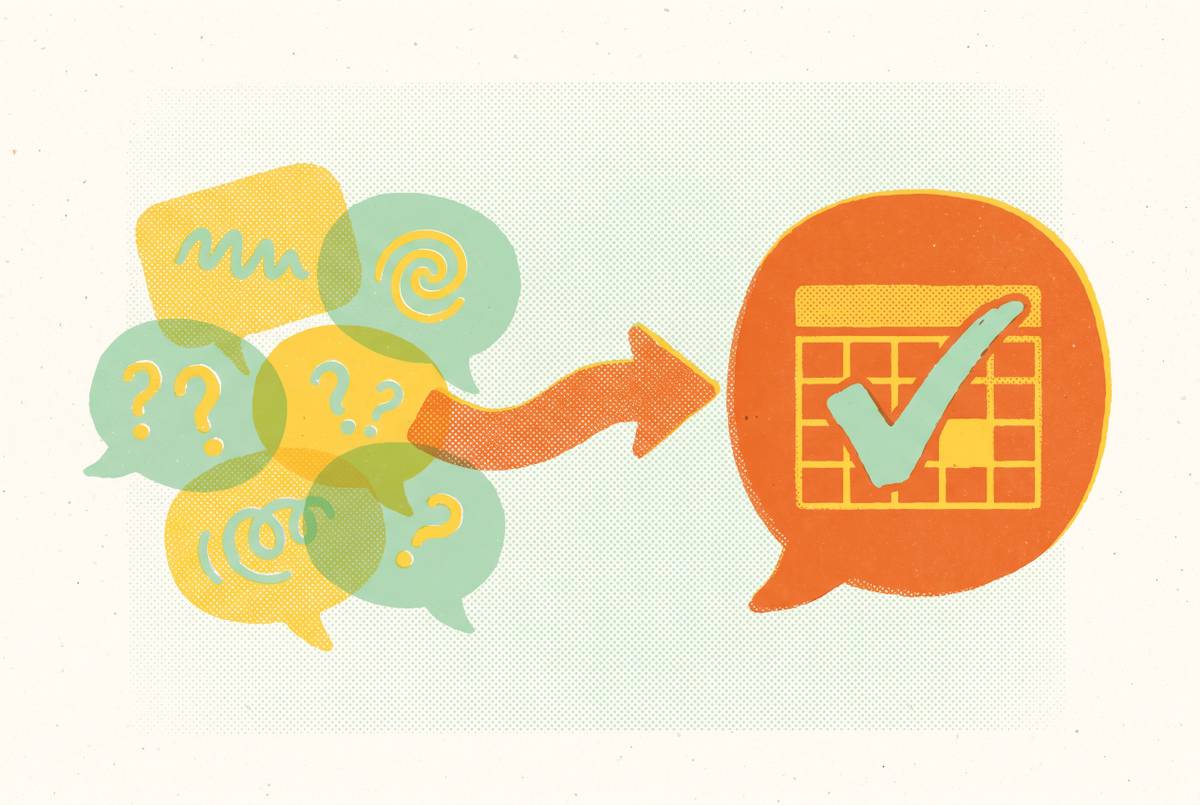
An AI scheduling assistant in iMessage group chats can turn an idea for a hangout into a calendar invite while keeping the chat in one place. Text Pencil finds a time, follows up, and sends the invite from the thread without a separate app download. The wider iMessage ecosystem serves different needs, so choosing well means distinguishing native features, extensions, standalone messaging apps, and conversational agents.
How iMessage group chats have changed — and why the ecosystem around them looks different now
iMessage launched in 2011 as a messaging service for Apple devices, then opened to third-party developer extensions with iOS 10 in 2016. That change brought mini-apps into chats, and the iMessage App Store had close to 5,000 message-enabled apps by early 2017. The ecosystem has since contracted sharply as Apple absorbed more functionality into Messages. There are fewer quality third-party apps to consider, but also fewer reasons to install one for an ordinary task.
iOS 26 marks the most significant group-chat update in iMessage’s history, expanding what groups can do without a download. The shift also reflects a practical principle, which is that coordination works best where the conversation already happens. In-chat tools such as Text Pencil apply that principle to scheduling within the conversation.
What iOS 26 now does natively inside group chats
When everyone in a group uses iOS 26 and iMessage, Messages now has built-in tools to help them make plans. Polls are available from the “+” button and let participants vote on availability, meals, or another set of options. Apple Support says that turning on Apple Intelligence also turns on poll suggestions, which appear above the keyboard. Group typing indicators make activity in the thread visible while those conversations unfold.
Apple Cash now works inside group chats for iOS 26 users, so they can settle shared dinner costs or trip expenses without a separate payment app. Conversation backgrounds, found through the group icon at the top, give each thread its own look. They are shared with every member. Image Playground can generate those backgrounds.
Live translation uses Apple Intelligence to let group members who speak different languages talk in real time. Spam screening moves messages from unknown senders into a silenced folder, reducing clutter around the conversations that matter. Send Later, introduced in iOS 18, handles a different timing problem by scheduling a message for delivery. Apple stores that message on its encrypted servers, so the sender’s device does not have to be on when it is sent.
The hard boundary iOS 26's native tools cannot cross
Everyone must use iMessage and iOS 26 to get all the native features, which leaves out many groups of friends who use different devices. Send Later has this limit because it cannot schedule RCS, SMS, or MMS messages.
That boundary also affects privacy and scale. iMessage is end-to-end encrypted by default, whereas SMS/MMS fallback for a thread containing a non-Apple device is not, changing the conversation’s privacy profile without a visible warning to participants. iMessage groups top out at around 32 participants, and carrier limits for SMS groups are lower still. Those ceilings accommodate friend groups more readily than larger communities or event groups.
Native Polls collect choices, but they do not automatically compare availability across multiple calendars or send invitations after a time is selected. Text Pencil connects to the calendars of people in the group and does that scheduling work within the chat. The relevant distinction is between collecting an answer and completing the coordination, rather than between Apple and third parties in general.
Third-party apps that still add real value inside iMessage group chats
Polls for iMessage fills a specific gap for groups that have not moved to iOS 26. It is free to download and supports a title, unlimited options, and live vote updates visible in the conversation. Groups can choose who sees votes, let people add options and pick more than one, and have the app declare a winner on its own. Its constraint is adoption, because every participant must download the app to vote.
The free Google Maps iMessage extension serves the moment when people are already heading toward a meeting place. It shares a user’s current location and estimated arrival time directly in the group chat. That is useful when participants are converging on a venue or have become separated. Both senders and recipients need Google Maps installed, so the extension removes a conversational detour while retaining the installation requirement.
Most of GamePigeon’s games are one-on-one, but Crazy 8, similar to UNO, supports 3–6 players in a group chat. Everyone must join at the same time and stay on the device where the game started, since switching devices mid-game is not supported. A player who leaves forfeits, and the game may revert to one-on-one or end entirely.
When to leave iMessage entirely for group coordination
A standalone messaging app becomes relevant when the membership or size of a group conflicts with iMessage’s limits. WhatsApp is a practical first answer for international or mixed iPhone/Android groups. It provides end-to-end encryption by default, strong media handling, and broad adoption that can lower the effort of bringing people in. The trade-off is still a platform move, even when many participants already use it.
GroupMe fits casual, recurring US-based groups, including school clubs, parent circles, and hobby groups. It supports polls, media sharing, and event organization, with a web client for organizers who prefer working away from a phone. It is not designed for compliance, analytics, opt-in handling, or customer messaging at scale. A social group and an operation whose messages affect revenue or regulated communications have different requirements.
Apple Messages is still the best choice for close-knit groups whose members all have iPhones and want nothing to set up. Staying native makes sense until a specific constraint, including mixed devices, scale, or payment handling, changes the decision. Moving everyone is not automatically an improvement over adding a focused capability to an existing conversation.
The imessage.store marketplace and the new category of AI agents inside iMessage
The imessage.store marketplace adds a new kind of tool to the ecosystem, AI agents that talk with people through iMessage text. Unlike a traditional extension opened from the “+” menu, an agent uses the conversation itself as its interface. It reads and responds to natural language rather than requiring participants to navigate a mini-app.
Native polling and payment tools do not track commitments, provide follow-up nudges, or turn a loose proposal into a confirmed calendar item. Conversational agents can do those tasks right in the chat. The access that makes them useful also makes their handling of personal information consequential.
What to look for — and look out for — when an AI assistant joins a group chat
An assistant’s access can extend beyond the person who invited it. Contacts and threads contain details about friends, family, and colleagues who never signed up, including relationships, schedules, and sensitive information shared privately. The feature description explains what an agent offers, but its terms determine the permissions attached to that offer. Evaluating it therefore requires attention to non-users as well as account holders.
Instinct, still in private access as of August 2026, illustrates the distinction between capability and trust. Testers flagged its Terms of Service revised August 20, 2026, which granted a broad “perpetual and irrevocable” license over user materials for AI training, including screen captures, cursor movements, and keyboard inputs. Instinct rewrote the terms on August 26, 2026, removing that language and the explicit device-data references. Moxxie Ventures founder Katie Jacobs Stanton also described a trust break when Instinct sent an email on her behalf without asking first.
The Future of Privacy Forum notes that agents may be most valuable when handling sensitive information such as email, calendars, and financial accounts, where exposure is also greatest. Links to file storage and project management tools give data more paths to travel. California’s 2026 regulations address automated decision-making used for significant decisions, with risk assessment obligations beginning January 1, 2026, and disclosure and opt-out requirements applying from January 1, 2027. The EU AI Act also imposes transparency and data governance requirements.
For a group-chat assistant, evaluation starts with whether it shares full event details or only availability. It also includes whether the agent sends messages or makes bookings without confirmation. Training permissions, retention terms, and the ability of non-users to opt out of being referenced deserve separate attention. The Instinct case supports examining those boundaries for each agent.
Why plans still die in the thread even when the right tools are available
Making a group plan often gets hard after everyone has said they are interested. Details get buried in old messages, while people say when they are free in separate replies. A poll can let people answer at different times without resolving whether a tentative agreement has become a commitment. Someone still has to close the loop, and no one necessarily wants to keep pushing.
University of Kansas communication researcher Jeffrey Hall has found that adults can feel close to each other and still fail to follow through. Saying “we should do this again” may be sincere, yet going silent costs less effort than arranging the next meeting. Research on friend ghosting likewise finds that people usually disappear because they face little cost for doing so, with malice playing less of a part. It also finds harm for both the person who goes silent and the person left waiting.
This is different from simply losing touch. People can keep affirming the relationship while neither supplies a date, until the expression of interest becomes a ritual that replaces the plan. Follow-through matters because goodwill is already present. The missing step is turning that goodwill into something both people can keep.
How to schedule a group hangout without leaving iMessage
An iMessage-native scheduling assistant addresses that missing step within the thread where the invitation began. Pencil uses participants’ calendars to find a time, follows up when the conversation goes quiet, and sends the calendar invite. There is no booking page or separate app to download. Compared with native Polls, its role is not to gather another round of preferences but to carry the plan through to the calendar.
Text Pencil also makes a specific distinction between information needed for coordination and information that should remain private. It shares availability rather than event details, so participants see when someone is free without seeing what they are doing. Information learned in one chat does not surface in another. Those boundaries answer concrete privacy concerns, although they do not replace examining an agent’s terms and permissions.
Persistent, editable contact preferences reduce the need to repeat how someone likes to meet or which times work for them. That memory supports another plan without requiring the relationship to be explained again. Follow-ups can be disabled in settings, keeping the nudge under the user’s control. The intended outcome is a confirmed plan, after which the assistant recedes rather than becoming another ongoing demand on the thread.
A practical map of the iMessage group chat ecosystem as it stands
Native iOS 26 features work for all-iMessage groups that want to vote, make payments, use translation, or send messages later without another download. Traditional extensions fill narrower gaps, including polling before iOS 26, location sharing through Google Maps, and shared games through GamePigeon. Who needs to install them matters, and with fewer extensions in the ecosystem, groups should check whether an app is still being maintained before choosing it.
When the devices people use or the size of the group puts native tools out of reach, WhatsApp and GroupMe each have their own reasons to switch. When the conversation already has a suitable home but plans stall before confirmation, a scheduling assistant addresses a different problem.
A richer thread can make discussion easier, but the final measure is whether the people in it actually get together. The right coordination tool turns a willing conversation into a plan, then gets out of the way.