iMessage Group Chat Naming and Threading Conventions
Naming a group chat helps people find it, not finish plans.

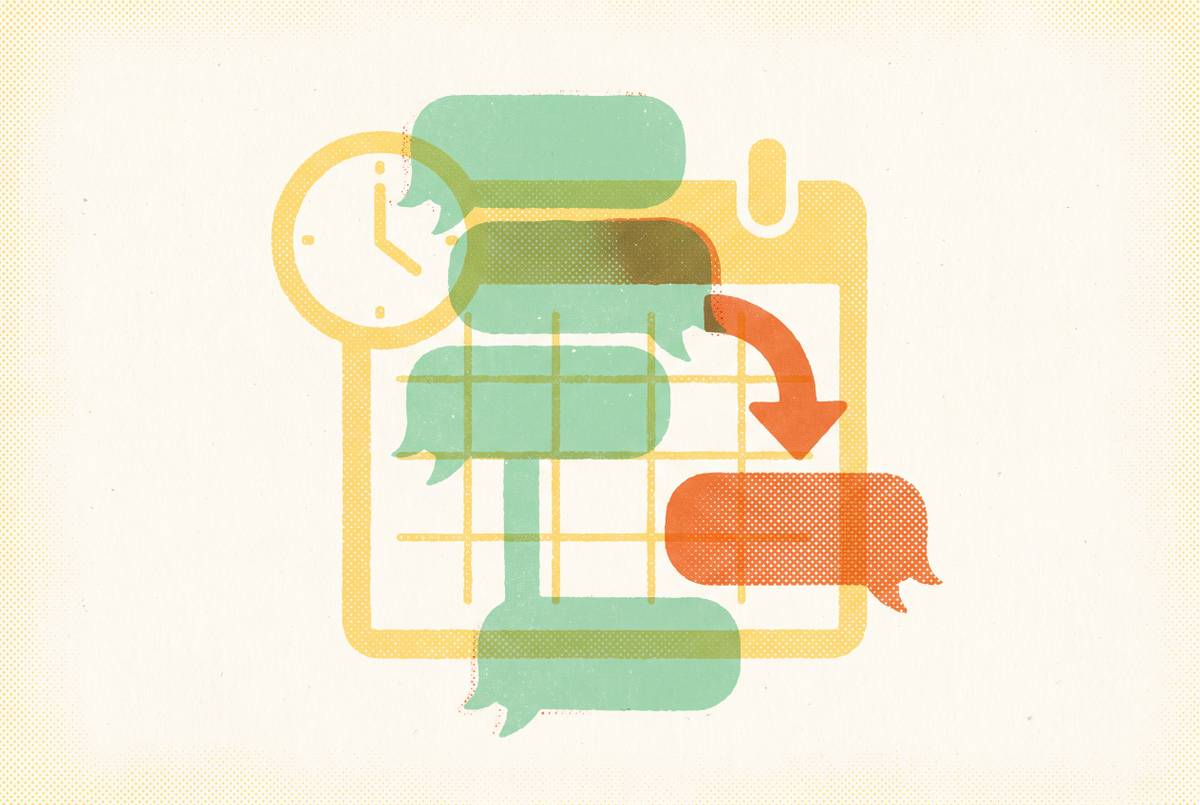
Pencil is an AI scheduling assistant inside iMessage group chats, designed around sharing availability rather than reading messages to coordinate plans without leaving the conversation. Group chat naming and threading conventions provide the foundation for that work. A clear name makes a conversation findable and gives it a shared purpose, but timely follow-up is what turns that purpose into a calendar entry.
How iMessage decides what a group chat can and cannot do
Apple Support states that a group iMessage can be named as long as everyone is using an Apple device. SMS/MMS group messages and iMessage conversations with just one person cannot be named. A persistent group name visible to all participants depends on the conversation being an eligible group iMessage, so a naming convention cannot be applied independently of the messaging system underneath it.
A group may have a clear purpose and stable membership, yet still lack the shared naming feature because it is an SMS/MMS conversation. The resulting limitation is not solved by choosing a better descriptor or finding a different naming style. Before a name can serve as shared infrastructure, the thread must support it.
The interface also affects whether people find the feature. Apple’s iPhone User Guide places Edit Name & Photo behind Edit in iOS 26, after the user opens the group icon at the top of the conversation. That differs from the earlier placement of Change Name and Photo beneath the group icons and participant names. Familiarity with an older menu can therefore send someone to the wrong place. This explains some friction, but not the broader habit of leaving eligible conversations unnamed.
Why the naming feature is so widely ignored, even by the people who built the product
Tim Cook’s first named group chat was called “Roommates.” The choice was descriptive, stable, and searchable. It illustrates the useful simplicity of naming without making a feature demonstration out of it. The name describes the relationship the group shares and gives people a way to recognize the conversation even as new messages arrive.
Apple’s Messages app organizes conversations chronologically. A thread rises because someone speaks. The interface supplies a stream of recent activity. It does not require participants to define which conversations are temporary exchanges and which are places they expect to return to.
People can begin talking, add the participants they need, and leave the conversation without declaring what it should become. Choosing a name asks people to make one more small decision about the group beyond what to say in the next message. Even someone familiar with the product can defer that decision because nothing about sending the next message depends on making it.
Better knowledge of the menu would make naming accessible, but would not by itself create a reason to name every thread. The convention becomes useful when participants treat a conversation as a continuing place. A name is the point at which that different expectation becomes visible.
What a name actually does to a conversation's findability and social legibility
A group name does two distinct jobs. It helps someone locate the right conversation, and it tells the participants what that conversation is for. A distinctive emoji may make a thread easy to recognize without explaining its purpose, while a descriptor can state the purpose directly. The choice determines how much shared knowledge someone needs to interpret it.
For findability, a name replaces the work of identifying a group through its participants and recent messages. That becomes useful when someone needs to confirm a time or share a location while already in motion. The thread needs to be recognizable before its contents are read. A photo or emoji adds a second recognition layer, giving someone scanning a small screen a visual cue as well as a textual one.
Social legibility operates beyond that moment of retrieval. “Roommates,” “Thursday crew,” and “Mom’s birthday” each declare a different scope. Participants can infer whether the conversation concerns a continuing relationship, a recurring gathering, or a particular occasion. That framing also shapes what belongs in the thread and how urgently a reply may be expected. The name makes an otherwise implicit understanding available to everyone.
An unnamed group leaves more of that interpretation unresolved. It identifies the people who happened to be included, but does not declare why they belong together in this conversation. That ambiguity gives drift and silence more room. Naming costs a small act of definition, yet gives participants a common basis for recognizing both the thread and their role in it.
How naming conventions shape whether a thread can hold coordination over time
A naming convention also encodes an expected lifespan. A single emoji, a person’s name, a purpose descriptor, and a date frame the same set of participants differently. “Saturday” points toward one event and an implied endpoint. “Book club” points toward recurring activity and continuing membership. Before anyone proposes a plan, the title has established a mental model for what the conversation can contain.
That expectation is the link between naming and coordination. In a purpose-named group, a new logistical question arrives within an existing scope. Participants do not have to decide afresh whether the question belongs there or whether a separate conversation is needed. The group’s reason for existing survives the completion of any one plan.
An event name creates a different pattern. Once the event ends, further messages can appear to be reviving a finished conversation. Event-named groups tend to go quiet and are rarely repurposed, even when the same participants need to coordinate again. A new unnamed thread then separates the next plan from the history of what worked before.
A thread can also outlive its original framing. “Holiday plans” may no longer describe friends who want to coordinate throughout the year. Apple’s support guidance does not list an original-participant restriction on naming, so that mismatch should not be presented as a documented administrative lock. The naming convention still needs to fit what the group is for now. A durable thread depends on participants understanding that it remains an appropriate place for the next plan, rather than treating its old title as an expiration notice.
Why plans still die in well-named threads, and what the name alone cannot fix
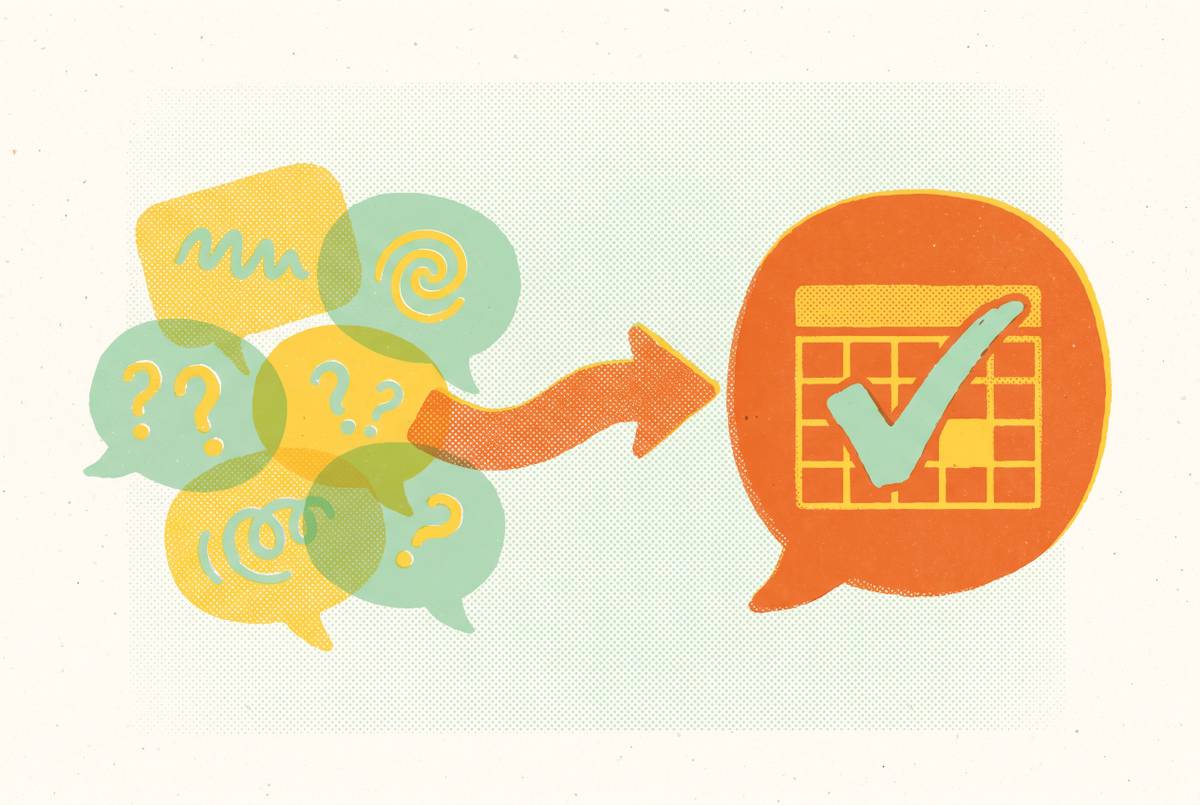
A shared purpose does not assign the next action. When a question goes to eight people, each person can assume someone else will answer or take responsibility for closing the plan. A name makes the group recognizable without making any participant accountable. This is diffusion of responsibility inside an otherwise organized conversation. The thread can be easy to find and still have no one moving it forward. That gap is where Text Pencil, an iMessage scheduling assistant added to the group chat, helps the group find a time and sends the calendar invite.
Flaky, a social planning app, states that the average group chat takes 50 messages to confirm one Saturday plan. Time, place, and headcount can sit in different parts of that exchange. People then have to scroll to check a detail, so they may ask again instead. Each repeated question adds more conversation around the information everyone needs.
Naming the thread does not create a pinned record of the decision, and a half-made arrangement can disappear beneath newer messages. The distinction is between locating the right conversation and locating its settled outcome. The first helps with the second, but does not accomplish it. A well-named thread remains a stream.
Social enthusiasm introduces another gap. Reacting positively is easier than deciding, and participants can keep expressing interest while waiting for someone else to make the proposal definite. No one necessarily wants the role of repeated nudger. Plans that happen often bypass that negotiation because one person states an activity, day, and time as a decision. That can feel less collaborative in the moment, but it gives everyone something concrete to accept or decline.
The follow-up gap: how timing and persistence determine whether a named thread produces a plan
Someone suggests a date, several people like the idea, and the plan is close enough to settle. Yet the chat moves on before anyone gets those people to commit. Later, reopening the subject feels more like nagging than completing unfinished work. The obstacle is not lack of a recognizable thread, but failure to act while the proposal still has momentum.
A follow-up therefore does more than repeat information. When it comes at the right time, it helps the group turn their interest into a decision they can plan around. An eager first message cannot do the work of that later follow-up ahead of time. Nor can a name distinguish an unanswered proposal from a completed plan.
When no date works for everyone, continued polling can prolong the same uncertainty. Groups should choose the option with the most attendance and commit to it without requiring unanimity to proceed. Follow-up wording should reflect that decision. Tentative language reopens negotiation, while a clear statement that the gathering is going ahead gives participants a reason to rearrange.
Where the follow-up happens is also consequential. A persistent, low-friction reminder inside the original thread differs from a separate booking tool because participants do not have to leave the conversation to engage with it. It also differs from a manual nudge because someone need not repeatedly perform the administrative act of reviving the plan. The named group supplies the right container and the relevant people.
What an AI scheduling assistant adds to a named group thread — and what discretion requires it to withhold
Pencil addresses that follow-up gap as an AI scheduling assistant inside iMessage group chats. Its design centers on availability-sharing and excludes message-reading. That distinction keeps the scheduling task focused on finding a workable time, rather than exposing the details behind someone’s calendar. The group needs to know when a person can attend. It does not need private event information to make that decision.
For someone seeking to schedule a group hangout without leaving iMessage, the relevant criteria are conversational fit, useful follow-up, and restraint. An assistant in the existing thread can support the transition from interest to a calendar entry where the participants are already talking. The assistant adds coordination while the group retains its identity.
With general-purpose AI assistants, people worry that messages may be stored on external servers and used for training. In a group chat, the information at stake belongs to everyone present. One participant’s desire for convenience does not resolve the others’ expectations of discretion. Pencil’s availability-sharing approach addresses that concern structurally by centering the scheduling input rather than treating the conversation as material to be read.
Effective follow-up closes an open decision without taking over the exchange or making coordination the permanent subject of the thread. A useful intervention has an endpoint. Once the plan is on the calendar, the assistant has completed its role, while the named conversation remains available for the relationship or purpose that brought its participants together. The assistant recedes into the background, and the conversation returns to the people in it.